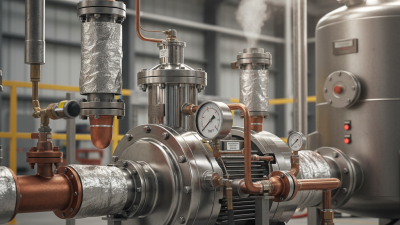
2026 Best Propane Transfer Pump for Global Buyers?

Global propane trade is expanding, but equipment choices remain highly regional. The World LPG Association’s 2024 Statistical Review places global LPG demand above 330 million tonnes in 2023. The U.S. Energy Information Administration also reported average propane exports near 1.6 million barrels per day during 2023. These figures reveal a practical reality. A reliable propane transfer pump must handle longer supply chains, varied storage systems, and changing site conditions.

For global buyers, capacity alone is not enough. Flow rate, vapor pressure, motor protection, seal materials, grounding, hose compatibility, and emergency shutoff design deserve equal attention. NFPA 58 remains an important reference for LP-Gas storage and transfer safety in the United States. Buyers should also verify local certification, electrical classification, and service support before ordering. A pump that works well in a warm depot may struggle in a cold, dusty terminal. Small details matter.

Steve Kaminski, former president and CEO of the Propane Education & Research Council, has repeatedly emphasized, “Safety is everyone’s responsibility.” That principle should guide every propane transfer pump comparison. The cheapest unit may look attractive. It may also create costly downtime later. This 2026 guide compares practical performance, safety features, maintenance needs, and supplier reliability for international buyers. No single model fits every market. That limitation is easy to overlook. Careful specifications, documented testing, and local technical advice still matter more than impressive marketing claims.
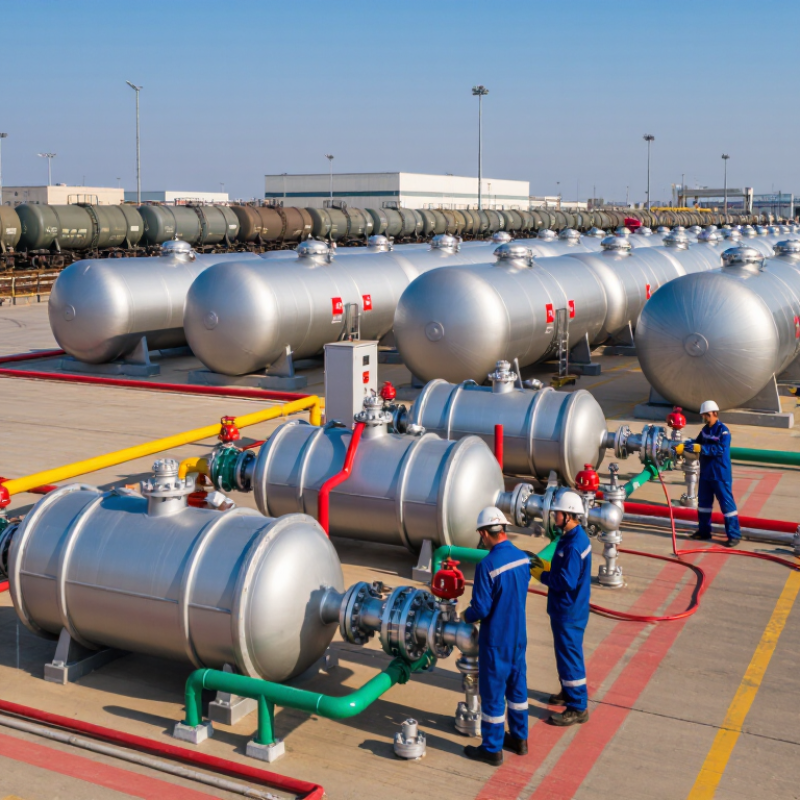
2026 Best Propane Transfer Pump for Global Buyers?

What Is a Propane Transfer Pump and How Does It Work?

2026 Best Propane Transfer Pump for Global Buyers?

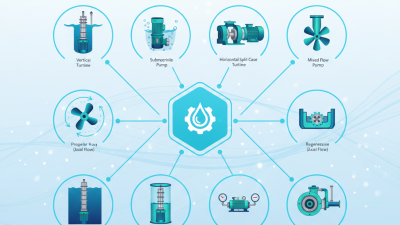
A propane transfer pump moves liquid propane between approved storage vessels. It does not pump vapor. Inside the pump, a motor drives either a positive-displacement or centrifugal mechanism. This creates controlled flow through the liquid line. A vapor-return line balances pressure between the receiving vessel and the supply vessel. Without that balance, transfer may slow or stop.

Propane remains liquid under pressure. The U.S. Energy Information Administration reports about 91,500 Btu per gallon and approximately 4.24 pounds per gallon at 60°F. These figures explain why flow rate matters: a small pump can transfer substantial energy quickly. The World LPG Association’s 2024 Statistical Review estimates global LPG demand at roughly 330 million tonnes in 2023. Buyers therefore need more than a convenient motor. They should verify flow, differential pressure, duty cycle, inlet size, voltage, and temperature limits.

Safety details are not optional. NFPA 58 guidance emphasizes approved equipment, pressure relief, bonding, grounding, and controlled transfer procedures. An inlet strainer can protect the pump from debris, while an excess-flow device can limit accidental discharge. Field conditions are rarely perfect. Cold weather can reduce pressure, and long hoses can restrict flow. Published performance is a reference, not a guarantee. A pump rated for high flow may perform poorly with vapor pockets, undersized piping, or a weak power supply. That is easy to overlook. Global buyers should also confirm local certification requirements before installation.

Key Specifications for Comparing Propane Transfer Pumps

2026 Best Propane Transfer Pump for Global Buyers?

Key Specifications for Comparing Propane Transfer Pumps

Choosing a propane transfer pump requires more than checking its advertised flow rate. Compare flow, pressure, motor power, and duty cycle together. A pump rated at 40 liters per minute may slow considerably through long hoses or restrictive valves. Check the maximum differential pressure under realistic operating conditions. Also confirm whether the unit supports liquid propane temperatures expected at your site.

Materials and protection deserve equal attention. Look for corrosion-resistant pump bodies, compatible seals, grounded components, and a motor enclosure suitable for the installation area. Overpressure protection, emergency shutoff access, and vapor-tight connections are practical safety details. Regional electrical and equipment requirements can differ, so verify documentation with a qualified local professional. Field inspections often find missing certificates or unclear test records. That oversight can delay installation.

Tips: Measure the hose length before comparing models. Match the inlet and outlet size carefully. Ask for performance curves, seal material data, inspection records, and maintenance intervals. Test grounding continuity during commissioning. Do not rely on a single flow figure. A lower purchase price may hide higher service costs, and I would not ignore that risk. One specification sheet can still leave important questions unanswered.

Safety Standards for Propane Pumping in Global Markets

2026 Best Propane Transfer Pump for Global Buyers?

Safety must guide every propane pump decision, especially when equipment crosses borders. A suitable pump should match the gas service, pressure range, flow rate, and installation environment. Look for documented compliance with recognized requirements, such as ATEX, IECEx, NFPA 58, or applicable local standards. These systems differ by market, so one certificate may not satisfy every authority.

The pump should include reliable pressure relief, emergency shutoff control, conductive hoses, and secure grounding points. Explosion-protected electrical parts are essential in hazardous areas. Connections must resist leakage during repeated transfers. Inspect seals, valves, and hose fittings before each operation. A small odor near a coupling should never be treated as normal. Stop work, isolate the supply, and follow the site emergency procedure.

Tips: Confirm certification with the local regulator before purchasing. Keep transfer lines short and protected from vehicle movement. Use a pressure gauge that operators can read clearly. Train workers on shutdown steps, static control, ventilation, and leak response. Never depend on a pump manual alone; installation conditions can change the risk. A checklist helps, but it can still miss damaged grounding cables or aging seals. That weakness deserves honest review. Record inspection dates, test results, operator training, and corrective actions. Reliable documentation supports safer decisions when equipment moves between different global markets.

2026 Best Propane Transfer Pump for Global Buyers? - Safety Standards for Propane Pumping in Global Markets

Evaluation Dimension Recommended Safety or Selection Benchmark Why It Matters for Propane Transfer Global Buyer Verification Point
Pump operating principle Use a positive-displacement LPG transfer pump for controlled liquid transfer; select a centrifugal design only when its LPG service suitability and vapor-handling capability are documented. Propane can flash into vapor when pressure falls below its vapor pressure. Pump design affects priming, flow stability, and vapor-lock risk. Request the pump curve, minimum inlet-pressure requirement, allowable vapor content, and documented compatibility with liquefied petroleum gas.
Pressure and temperature rating All wetted components, seals, hoses, valves, and fittings should be rated for the complete design pressure and temperature range, including the maximum filling or storage temperature. Propane vapor pressure increases significantly with temperature; a component rated only for water or low-pressure fuel service may fail dangerously. Compare the nameplate pressure rating and temperature range with the installation design basis and local pressure-equipment rules.
Electrical hazardous-area suitability Motor, switches, junction boxes, cable glands, and instrumentation should be certified or approved for the classified hazardous area in which they will be installed. Released propane forms a highly flammable atmosphere. Ordinary electrical equipment can provide an ignition source. Match the equipment marking to the site classification, such as IEC 60079 zone classification or North American Class/Division classification.
European and international conformity For applicable European installations, verify conformity with the EU Pressure Equipment Framework, ATEX requirements for equipment in explosive atmospheres, and relevant harmonized or designated standards. The required conformity route depends on equipment category, pressure level, electrical construction, and intended hazardous area. Check the Declaration of Conformity, ATEX equipment category, gas group, temperature class, and notified-body details where required. IECEx certification may support international acceptance but does not replace every national approval.
United States and Canada Design and installation should be reviewed against applicable LPG storage and transfer requirements, including NFPA 58 in the United States and CSA B149.2 in Canada, together with electrical-area rules. These jurisdictions regulate container protection, transfer operations, emergency controls, separation distances, piping, and electrical installations. Confirm acceptance by the authority having jurisdiction and verify whether the site uses NEC Class I, Division 1/2 or Zone classifications.
United Kingdom and other UK-regulated sites Apply the applicable UK pressure-equipment, explosive-atmosphere, electrical-installation, and LPG-storage requirements after the site risk assessment. Post-Brexit conformity marking and approval routes can differ from EU routes, even when technical principles are similar. Verify whether UKCA, CE, UK pressure-equipment conformity, or third-party certification is required for the specific installation and import route.
Emergency shutoff and excess-flow protection Provide an accessible emergency shutdown system, automatic or manual isolation, and excess-flow or breakaway protection where required by the installation design. These controls limit the release of liquid propane after hose rupture, vehicle movement, pump failure, or abnormal pressure. Verify shutdown response, valve fail position, remote-stop locations, reset procedure, and compatibility with the local fire-protection plan.
Pressure relief and bypass circuit A positive-displacement pump requires a correctly sized internal or external relief/bypass arrangement that returns liquid to an approved low-pressure side or storage vessel. Dead-heading a positive-displacement pump can rapidly raise pressure and damage piping, seals, or the pump casing. Check relief-valve set pressure, discharge destination, capacity, inspection requirements, and whether isolation of the relief path is prevented.
Materials and seal compatibility Use materials and elastomers specifically documented for LPG service; avoid relying on generic water-pump or petroleum-service compatibility claims. Propane, odorants, pressure cycling, low temperatures, and decompression can affect swelling, embrittlement, leakage, or seal extrusion. Request a wetted-material list, seal compound, low-temperature rating, chemical-compatibility statement, and spare-seal specifications.
Hose, piping, and connection standards Use LPG-rated hoses, conductive bonding where required, protected connections, suitable thread or flange standards, and correctly installed excess-flow or isolation valves. Hose failure, static discharge, incompatible threads, and mechanical damage are common contributors to LPG release incidents. Verify hose working pressure, electrical continuity, bend radius, inspection interval, connection standard, and local certification requirements.
Flow-rate selection Select flow based on tank size, transfer time, permitted filling rate, piping losses, vapor-return arrangement, and the receiving system’s maximum allowable flow. The highest advertised flow is not necessarily the safest or most usable flow under actual LPG inlet conditions. Review the performance curve at the actual liquid temperature, suction pressure, discharge pressure, hose length, and elevation.
Vapor-return and non-condensable control Where required by the installation, provide a properly designed vapor-return path and procedures for removing trapped vapor or non-condensable gas. Vapor accumulation can reduce pump performance, increase pressure instability, and create an uncontrolled release hazard. Confirm vapor-return routing, pressure balance, isolation points, purge procedures, and compliance with the local LPG code.
Grounding, bonding, and static control Bond and ground conductive equipment according to the site electrical design, and verify continuity before transfer operations. Static discharge can ignite a propane-air mixture during connection, disconnection, or liquid transfer. Document grounding points, continuity-test method, inspection frequency, and any interlock that prevents pumping without a verified connection.
Instrumentation and monitoring Use suitable pressure, temperature, level, leak-detection, and motor-protection devices where required by the risk assessment and local code. Monitoring helps identify blocked discharge, loss of suction, overtemperature, seal leakage, and abnormal tank conditions before escalation. Verify sensor hazardous-area approval, alarm set points, calibration records, fail-safe behavior, and integration with emergency shutdown.
Documentation and lifecycle maintenance Require installation instructions, operating procedures, risk assessment, inspection schedule, spare-parts list, conformity documents, and maintenance records. Safe LPG pumping depends on correct installation and recurring inspection, not only on the pump’s initial specification. Before purchase, confirm local-language manuals, technical support, seal availability, inspection intervals, and training requirements.

Buyer note: Regulations and approval requirements vary by country, site classification, storage capacity, and intended use. The final pump, piping, electrical equipment, and operating procedure should be reviewed by a qualified LPG engineer and the relevant authority having jurisdiction before installation.

How to Choose the Best Pump for Different Transfer Applications

Choosing the best propane transfer pump starts with the application, not the advertised flow rate. A small cylinder filling station needs different performance from a bulk storage transfer line. Check the required flow, pressure difference, hose length, and transfer distance. A pump moving propane uphill may need more pressure than a pump serving a nearby vessel.

Match the pump to the operating environment. Use materials compatible with liquefied propane, and confirm seals remain reliable across expected temperatures. A compact electric model may suit indoor service when the installation has approved electrical protection. A vehicle-mounted system may need a different power source, vibration resistance, and secure mounting. Slow transfers can be safer and more controllable.

Safety details deserve close inspection. Look for suitable relief protection, grounding provisions, leak-resistant connections, and clear operating limits. Equipment should meet applicable local standards and be installed by trained personnel. Never select a pump only because it promises maximum capacity. Excessive flow can create pressure problems, heat, or difficult valve control.

In field assessments, hose routing is often overlooked. A sharp bend can restrict flow and strain a connection. Measure the actual setup. Then compare pump curves, not just catalog headlines. A pump that looks ideal on paper may underperform in cold weather or with a clogged filter. I would also review maintenance access before purchase. This step is easy to miss, and replacing a seal in a cramped cabinet can turn a routine task into expensive downtime.

Installation, Operation, Maintenance, and Troubleshooting Essentials

2026 Best Propane Transfer Pump for Global Buyers?

Installation, Operation, Maintenance, and Troubleshooting Essentials

Safe propane transfer begins with correct installation. Place the pump on a stable, level surface with clear ventilation. Confirm every hose, seal, valve, and fitting suits propane service and the required pressure. Ground and bond the equipment according to local electrical and fire-safety requirements. A qualified technician should verify the setup before use. Never rely on appearance alone.

Keep the transfer path closed until connections are checked. Open valves gradually, monitor pressure, and avoid running the pump dry. Watch for unusual vibration, rising temperature, or unstable flow. Stop immediately if any propane odor appears. Do not operate electrical switches near a suspected leak. Move people away and contact qualified emergency support. Small details matter.

Maintenance should include filter inspection, hose checks, seal replacement, and testing of shutoff devices. Record pressure, flow behavior, and service dates. A recurring field lesson is that ignored filters often look like pump failure. If the pump will not prime, check valve direction, trapped air, and supply level. Slow flow may indicate restriction or excessive hose length. Overheating can result from closed valves or dry running. Do not bypass a safety device to save time. Even experienced operators can miss one fitting. Review the procedure again.

2026 Best Propane Transfer Pump for Global Buyers: Vapor-Pressure Reference

Propane vapor pressure rises sharply as temperature increases. During pump selection and installation, confirm that the pump, seals, hoses, valves, and relief devices are rated for the expected operating temperature and pressure. These approximate values represent pure propane saturation pressure in bar absolute; actual LPG mixtures may differ. Always verify the local safety data sheet, regulations, and equipment documentation before operation or maintenance.