Choosing a water pump high pressure system is not simply a matter of selecting the highest pressure rating. That choice can waste energy, damage equipment, or produce disappointing cleaning performance. The right pump must match the application, water source, flow demand, operating hours, temperature, and delivery distance.
Dr. Lev Nelik, a recognized pump reliability specialist, has stated, “A pump is only as reliable as the system around it.” That principle matters when comparing electric, gasoline, diaphragm, and triplex plunger designs. A pump rated at 3,000 PSI may perform poorly if the inlet hose is too narrow, the water supply is restricted, or the fittings leak. Small details become expensive problems.
This guide presents seven practical tips for evaluating a water pump high pressure unit. It considers pressure and flow together, because either measurement alone can mislead. It also examines materials, seal quality, motor efficiency, noise, maintenance access, and safety features. Look closely at the manufacturer’s performance curve, not only the headline specification. Confirm whether the rating is continuous or maximum.
Real installations are rarely perfect. A pump may face hard water, fluctuating voltage, cold storage, or long periods of idling. These conditions deserve attention. I have seen buyers focus on pressure first, then discover that their hoses, spray nozzles, or filters limit the entire system. That mistake is common. It is also avoidable.
The following recommendations are designed for informed purchasing and dependable operation. They encourage careful comparison, honest expectations, and a final check against the actual working environment.
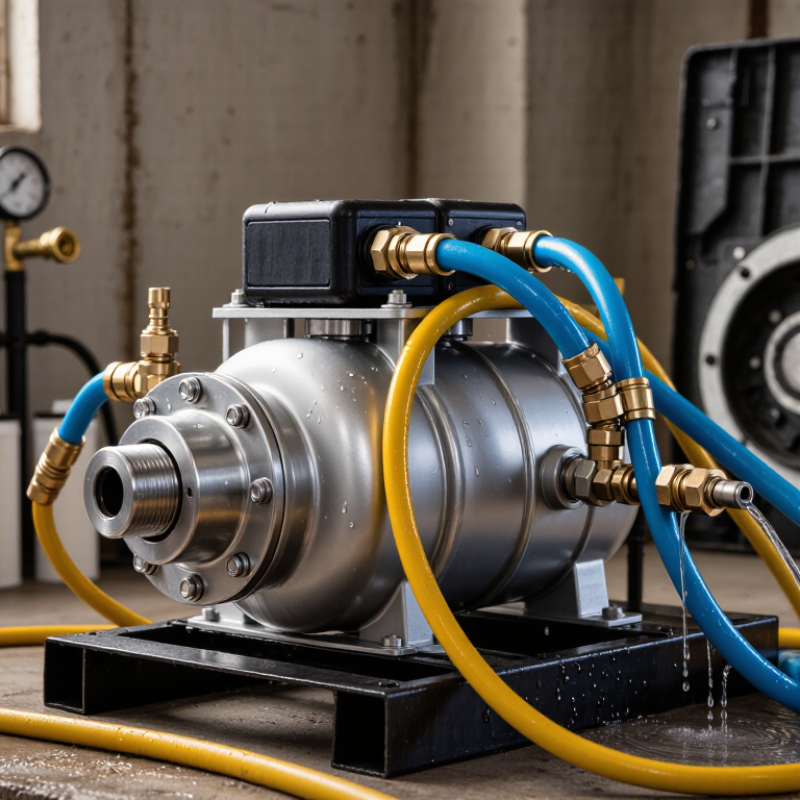
Choosing a high pressure water pump starts with three numbers: pressure, flow rate, and pumping capacity. Pressure is often confused with total head. Total head includes elevation, pipe friction, fittings, and the pressure needed at the outlet. Measure the highest discharge point carefully. Even a small height difference can change the pump selection.
Flow rate describes how much water the system must deliver each minute. Check the requirements of every nozzle, spray bar, or cleaning tool. Add their demand only when they operate together. Pumping capacity also depends on the source supply. A pump cannot deliver steady output if the tank or intake line cannot provide enough water. Test the inlet during operation, not only when the system is idle.
Use the pump curve to locate the duty point where pressure and flow meet. Do not select a pump by maximum pressure alone. That rating may apply at zero flow. A pressure gauge and flow meter provide useful confirmation after installation. Watch for sudden pressure drops, vibration, or a hot motor. These signs may indicate blockage, air entering the intake, or an undersized pipe. I have seen calculations look correct while the actual hose was too narrow. Recheck the figures. The field often disagrees. Allow a modest operating margin, but avoid excessive capacity, which can waste energy and strain fittings.
Choosing a High Pressure Water Pump
The water source determines the pump’s basic design. A shallow tank, deep well, rainwater system, and municipal line create different suction conditions. Tip 1: Measure the source depth and water level during the driest period. Tip 2: Match the pump type to that source, such as a self-priming pump for tanks or a submersible unit for deep wells. A pump that works well on a clean tank may struggle with sand or floating debris. Tip 3: Check water quality before selecting materials and filtration.
The application defines the pressure and flow requirements. Washing equipment may need strong pressure, while irrigation usually needs steady volume across several outlets. Tip 4: Calculate total head, including elevation, pipe friction, filters, and fittings. Tip 5: Choose a pump that meets both pressure and flow targets, not just its maximum pressure rating. That number can look impressive. It may not reflect real operating conditions. In field inspections, undersized pipes often cause more trouble than the pump itself.
Tip 6: Install protection against dry running, overheating, and unstable voltage. These safeguards can prevent expensive damage when the source level changes. Tip 7: Consider service access, noise, energy use, and replacement parts before installation. I once treated maintenance space as a minor detail; that was a poor assumption. A cramped pump room makes simple inspections unnecessarily difficult. Leave room for cleaning, testing, and safe connections.
Choosing a high pressure water pump requires more than comparing pressure ratings. Start with materials. Stainless steel suits corrosive water, while reinforced polymers can reduce weight and resist certain chemicals. Check the seals, fittings, and impeller too. One weak component can limit the entire pump.
Power options deserve careful attention. Confirm the available voltage, phase, and connection type before purchasing. A petrol-driven pump may suit remote work, while an electric model can operate quietly indoors. Match motor power to the required pressure and flow, not to an impressive number on the label. Oversized motors often waste energy and increase operating costs. Measure twice.
Operating efficiency depends on the working point. Review the pump curve and compare it with your actual flow demand. Running far from the recommended range can cause vibration, heat, and premature wear. Look for a sensible duty cycle, accessible maintenance points, and protection against dry running or overheating. Efficiency also includes installation. A long, narrow hose creates resistance and forces the motor to work harder. Keep the inlet line short, secure, and free from sharp bends.
In field work, I have seen users blame the pump when a clogged filter caused pressure loss. That mistake is easy to make. Inspect water quality, temperature, and elevation before deciding. If the application changes seasonally, record pressure and energy use during real operation. The cheapest option may not remain economical after repairs, downtime, and replacement parts are considered. Some specifications still need verification with a qualified technician.
| Tip | Key Dimension to Check | Practical Selection Data | Why It Matters | Verification Method |
|---|---|---|---|---|
| 1Match Pressure and Flow | Maximum pressure, working pressure, and flow rate | Select a pump based on the required operating point, not only the maximum rating. Pressure is commonly stated in bar or psi, while flow is stated in L/min or gal/min. For reference, 1 bar equals approximately 14.5 psi. | A pump may reach its advertised maximum pressure only at a low flow rate. Correct sizing prevents poor cleaning performance, excessive energy use, and premature wear. | Compare the application’s required pressure and flow with the manufacturer’s performance curve at the intended speed. |
| 2Check Pump Materials | Head, manifold, piston, valve, and fastener materials | Use corrosion-resistant materials for wet components. Stainless steel and engineered polymers are commonly used for corrosion resistance; brass is also widely used in pump heads. Ceramic plungers or pistons can provide high wear resistance in demanding applications. | Material compatibility affects service life, especially when the pump handles hard water, detergents, mildly corrosive fluids, or outdoor moisture. | Confirm the wetted-material list and chemical compatibility. Do not assume that a corrosion-resistant housing means every internal part is corrosion-resistant. |
| 3Choose the Right Power Option | Electric motor, gasoline engine, voltage, phase, and available power supply | Electric models are suitable where reliable electrical service is available and produce no direct exhaust emissions. Engine-driven models are useful for remote or high-mobility work. Verify voltage, frequency, phase, rated current, and motor protection before installation. | An incorrect power supply can cause motor overheating, nuisance tripping, reduced output, or unsafe operation. | Match the pump nameplate requirements with the site supply. A qualified electrician should verify circuit capacity, grounding, and protective devices for fixed installations. |
| 4Evaluate Operating Efficiency | Hydraulic output, motor input, duty cycle, and energy consumption | Hydraulic power can be estimated as: Phyd (kW) = Pressure (bar) × Flow (L/min) ÷ 600. For example, 150 bar at 15 L/min requires approximately 3.75 kW of hydraulic power before system losses. | The electrical or engine input must be higher than the hydraulic output because of motor, pump, and transmission losses. Operating near the required duty point is generally more efficient than oversizing substantially. | Compare input power at the required pressure and flow, and check whether the pump is rated for continuous, intermittent, or short-duration duty. |
| 5Inspect Seal and Valve Design | Seal material, valve construction, lubrication, and serviceability | Seals should be compatible with the water temperature, pressure, and cleaning chemicals. Common elastomer choices include EPDM, NBR, and FKM, but suitability depends on the fluid and temperature. Replaceable valves and seals simplify scheduled maintenance. | Worn seals or valves can cause leakage, pressure fluctuation, reduced flow, and air entering the suction side. | Review the allowable temperature and chemical range for each seal material, and confirm the availability of service kits and replacement parts. |
| 6Confirm Water Quality and Temperature Limits | Inlet temperature, filtration, hardness, suspended solids, and cavitation protection | Follow the pump’s specified inlet temperature and filtration requirements. A clean inlet filter is essential. Avoid restricted suction lines and excessive lift. Cavitation may occur when the pump does not receive adequate inlet pressure. | Contaminated water can damage valves, seals, and plungers, while insufficient inlet supply can create noise, vibration, pressure loss, and internal damage. | Install the recommended inlet filter, keep suction piping short and adequately sized, and check for stable inlet pressure during operation. |
| 7Prioritize Safety and Maintenance | Pressure relief, thermal protection, guards, shutdown controls, and maintenance intervals | Choose a pump with an appropriately sized pressure-relief or regulating device, overload protection, and a clearly accessible emergency shutoff. Follow the service schedule for oil, filters, seals, and valves. | High-pressure water can penetrate skin, damage surfaces, and cause serious injury. Preventive maintenance also helps maintain rated pressure and reduce unplanned downtime. | Verify that pressure controls are correctly adjusted, hoses and fittings are rated above the maximum working pressure, and inspection records are maintained according to the operating environment. |
Note: Pressure, flow, temperature, material compatibility, and duty-cycle limits must always be confirmed against the specific pump’s technical documentation and the requirements of the intended application.
7 Tips for Choosing a High Pressure Water Pump?
When comparing high-pressure water pumps, use seven practical checks. Check the pressure gauge, relief valve, thermal cut-off, and dry-run protection. These features reduce risks during blocked outlets or water shortages. Match the hose, fittings, and spray gun to the pump’s pressure rating. Never trust appearance alone. Confirm test records and operating limits with the supplier.
Choose a pump with an accessible inlet filter and drain points. This is the fourth check. A clogged filter can starve the pump and damage its seals. Inspect oil levels, vibration, leaks, and unusual noise during routine maintenance. Follow the recommended service interval, then shorten it for dusty water or frequent starts. I once underestimated inlet-water quality. The pump worked, but its seals wore out early.
Compare the rated duty cycle, not only the advertised pressure. That comparison affects heat, cooling, and service life. Ask about replaceable seals, corrosion-resistant fittings, spare parts, and repair training. Keep a simple log of operating hours, pressure, oil changes, and replaced parts. Small records reveal patterns. Cavitation and repeated dry running can destroy durable components. A realistic choice balances safe operation, manageable maintenance, and predictable downtime.
Compare safety features, maintenance needs, and expected service life across common high-pressure pump types.
Indicative engineering benchmarks for common pump categories. Scores are based on typical protection features, maintenance simplicity, and expected durability under proper installation and scheduled servicing. Actual results depend on pressure, flow, water quality, duty cycle, and operating conditions.
Choosing a high pressure water pump starts with the installation, not the catalog. Measure required flow, pressure, pipe length, elevation, and water temperature. Check the pump’s NPSH requirements against the site’s supply conditions. A small mismatch can cause vibration, overheating, or early seal failure. Confirm available voltage, control-panel space, drainage, ventilation, and maintenance access before ordering. Leave room for service.
Material selection matters. Stainless steel may suit clean water, while treated or abrasive water can require different wetted components. Ask for verified performance curves, efficiency data, noise levels, and duty-cycle limits. Do not judge by maximum pressure alone. That figure may apply only under restricted flow. Request test records when the application is critical.
Cost includes more than the purchase price. Compare energy use, replacement seals, filters, installation labor, and expected downtime. My early estimates often missed electrical upgrades and lifting equipment. Recheck the budget with an installer. It is worth questioning optimistic assumptions. Manufacturer support also affects long-term value. Ask about commissioning guidance, spare-parts availability, troubleshooting response times, training, and warranty terms. Get these details in writing. A technically suitable pump can still become expensive when support is slow or unclear. Choose a supplier that explains limitations honestly, not one that promises effortless performance.