2026 Best Boiler Feed Water Pump Buying Guide

Selecting a boiler feed water pump in 2026 requires more than comparing flow rates and purchase prices. The pump must deliver stable pressure, resist high temperatures, and tolerate changing boiler loads. A small mismatch can cause cavitation, vibration, seal damage, or costly production interruptions. Real plants are less predictable than catalog tables suggest.

The U.S. Department of Energy identifies pumping systems as a major industrial electricity user, often representing about 25% of industrial electricity consumption. Its Pumping System Assessment Tool also emphasizes system efficiency, not motor efficiency alone. The IEA’s Energy Efficiency 2023 report reinforces the value of reducing avoidable energy losses across industrial operations. These findings matter because a boiler feed water pump may run for thousands of hours each year. A few percentage points of efficiency can become a large operating expense.

This guide examines pump type, flow, head, NPSH, materials, control methods, maintenance access, and lifecycle cost. It also considers API 610, Hydraulic Institute guidance, and applicable boiler-system practices. Numbers still need verification. Vendor curves may use different test conditions. Site chemistry, deaerator pressure, minimum-flow requirements, and startup behavior can change the final selection. Therefore, the best purchase decision combines documented test data, experienced engineering review, and a clear understanding of daily plant conditions. Not every expensive pump is the safest choice. A reliable pump is the one that performs consistently when the boiler load changes, the water temperature rises, and the shift team needs it most.

2026 Best Boiler Feed Water Pump Buying Guide

What Is a Boiler Feed Water Pump and Why Does It Matter?

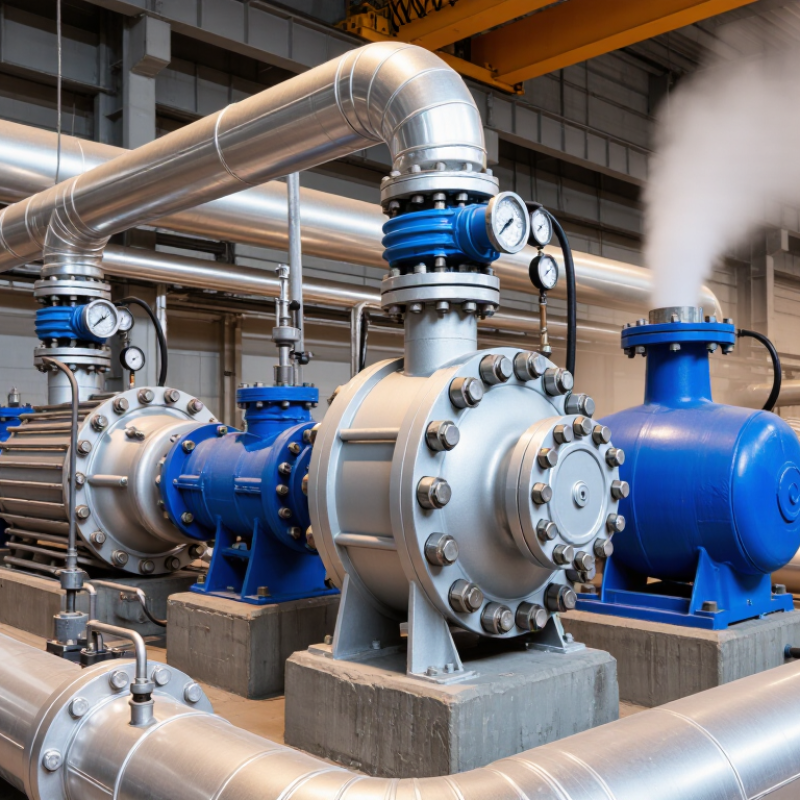
A boiler feed water pump moves treated water from a deaerator or feed tank into a boiler. It must overcome boiler pressure, piping resistance, and elevation changes. Unlike an ordinary transfer pump, it handles hot water under demanding conditions. Its flow rate must match steam production and maintain a stable water level. When sizing is careless, the pump may run far from its best efficiency point. That creates vibration, heat, and avoidable power consumption.

The pump matters because water delivery directly affects boiler safety and output. Too little flow can expose heating surfaces, causing overheating and expensive damage. Too much flow can disturb level control and waste energy. Cavitation is another concern. If available NPSH is insufficient, vapor bubbles collapse inside the impeller. The result may be noise, pitting, unstable pressure, and premature failure.

Maintenance teams sometimes focus on motor size while overlooking suction conditions. That is an easy mistake to reconsider.

A sound buying decision starts with verified operating data, not a catalog headline. Record normal and peak flow, feedwater temperature, pressure, water chemistry, and daily running hours. Check NPSH margin, materials, seal arrangement, standby capacity, and control compatibility. A pump with impressive maximum head may perform poorly at the actual duty point. Ask for certified performance curves and test records. Also inspect access for seals, bearings, and strainers. Small maintenance details matter. Some operating records will be incomplete, so conservative assumptions should be documented before selection.

How to Determine the Right Pump Capacity and Pressure

2026 Best Boiler Feed Water Pump Buying Guide

Correct capacity starts with mass balance, not the pump catalog. Calculate feedwater flow from steam production and blowdown. A practical formula is:

feedwater flow = steam flow ÷ (1 − blowdown fraction)

Add the highest operating demand, not only the average load. For example, 10 tonnes per hour of steam with 3% blowdown requires about 10.31 tonnes per hour of feedwater. A 10–15% allowance can cover short peaks, but excessive margin may cause cycling and poor efficiency. I would verify this allowance against actual plant trends.

Pressure selection requires a complete system map. Include boiler operating pressure, static elevation, economizer resistance, piping friction, valves, and the required control-valve differential.

The pump must also maintain adequate NPSH at the hottest deaerator condition. Hydraulic Institute guidance stresses checking NPSH margin under the worst suction scenario, not at room temperature. Small details matter. A clogged strainer can change the result.

The U.S. Department of Energy’s Improving Pumping System Performance sourcebook reports that pumping systems may consume 25–50% of electricity in some industrial facilities. Oversizing therefore creates a measurable operating penalty.

Select a duty point near the pump’s best efficiency region, then confirm performance at minimum and maximum demand. ASME B31.1 requirements should guide piping and pressure design. Field commissioning should record flow, suction pressure, discharge pressure, motor load, and vibration. One overlooked reading can invalidate an otherwise careful selection.

Which Pump Types and Materials Suit Boiler Feed Systems?

Boiler feed water pumps operate under demanding pressure and temperature conditions. For most medium and large boilers, multistage centrifugal pumps provide steady flow and efficient pressure gain. Their compact design suits continuous operation. Variable-speed control can reduce energy use when steam demand changes.

Positive displacement pumps may fit smaller boilers or systems requiring carefully metered flow. They handle changing pressure well, but pulsation, valve maintenance, and lower capacity can become practical concerns. A pump must match the boiler’s rated pressure, feed-water temperature, and required flow. Do not size it from boiler horsepower alone. Check the deaerator pressure, available NPSH, and pipe losses.

Material selection deserves equal attention. Carbon steel is economical for treated water and standard temperatures. Stainless steel offers better resistance when oxygen, chemicals, or condensate quality creates corrosion risks. Duplex stainless steel can improve durability in harsher conditions, though its cost and fabrication requirements are higher. Hardened wear components may help where suspended solids cause erosion.

Small details matter.

In site inspections, cavitation often reveals poor suction piping rather than a defective pump. I once underestimated startup conditions in a preliminary design; the operating margin looked adequate, but cold-water behavior exposed the weakness. That mistake reinforces a useful habit: review transient conditions, maintenance access, seal compatibility, and actual water chemistry before approving the pump. Some specifications still appear complete, but they are not.

2026 Best Boiler Feed Water Pump Buying Guide

Typical suitability of common pump types for boiler feed systems. Centrifugal multistage pumps are generally preferred for continuous, high-flow service, while positive-displacement pumps are better suited to lower-flow, high-pressure dosing or auxiliary duties.

The ratings are practical engineering guidance based on common boiler-feed applications, not manufacturer-specific performance data. Final selection should verify flow rate, discharge pressure, water temperature, NPSH available, dissolved-oxygen control, material compatibility, and applicable boiler codes.

How to Compare Efficiency, Reliability, and Maintenance Requirements

For a 2026 boiler feed water pump, compare performance at the real operating point, not the catalog’s best-case curve. Flow, pressure, water temperature, and control-valve losses must match site conditions. The U.S. Department of Energy’s Pumping System Assessment Tool guidance notes that pumping systems can represent about 25% of industrial electricity use. That figure deserves attention. Check pump, motor, and drive efficiency separately. A high-efficiency motor cannot rescue an oversized pump running throttled for most of the day. The DOE Motor Systems Market Assessment also reported that motor-driven equipment consumed roughly 68% of industrial electricity in the United States. Small efficiency losses become expensive over continuous operation.

Reliability depends on more than stainless steel or a larger shaft. Specify ISO 9906 performance testing, adequate NPSH margin, suitable metallurgy, and stable operation during startup. Watch vibration, bearing temperature, seal leakage, and lubrication condition. Keep baseline readings beside the pump, not only in a maintenance database. In practical plant reviews, poor alignment and repeated low-flow operation often create more trouble than the pump design itself. Maintenance requirements should include inspection access, seal replacement time, spare-bearing strategy, and clear flushing procedures. A monthly vibration route helps, but it does not replace operator observation. A weakness in many comparisons, including mine, is trusting calculated life too much. Actual water chemistry, thermal cycling, and rushed maintenance can change the result. Ask suppliers for tested curves, uncertainty limits, service records, and a written maintenance schedule before comparing purchase prices.

2026 Best Boiler Feed Water Pump Buying Guide - How to Compare Efficiency, Reliability, and Maintenance Requirements
Evaluation Dimension Recommended Target or Typical Range Priority How to Compare Before Purchase Maintenance Considerations
Pump Type Multistage centrifugal pump for high-head boiler feed applications; horizontal or vertical construction selected according to layout and pressure requirements. High Match the pump design with required flow, discharge pressure, water temperature, installation space, and operating duty. Confirm access to wear rings, bearings, mechanical seals, couplings, and stage components.
Rated Flow Capacity Select the rated point close to the normal operating demand, with practical allowance for peak load and future capacity needs. High Review the complete performance curve rather than comparing only the nameplate flow. Check normal, minimum, and maximum operating points. Avoid prolonged operation far below the minimum stable flow, which can cause overheating, vibration, and internal recirculation.
Total Dynamic Head The pump head must exceed boiler pressure, feed-line losses, elevation difference, control-valve losses, and required terminal pressure. High Calculate system resistance at actual feed-water temperature and verify the shutoff head, rated head, and run-out condition. Excessive head can increase throttling losses, shaft loading, and wear; insufficient head can reduce boiler water-level control.
Hydraulic Efficiency Approximately 75% to 90% for many properly selected industrial centrifugal pumps; larger, well-matched units may achieve the upper part of this range. High Compare efficiency at the normal duty point and calculate wire-to-water efficiency, not only hydraulic efficiency. Efficiency loss may indicate impeller damage, wear-ring clearance growth, fouling, misalignment, or operation away from the best efficiency point.
Best Efficiency Point (BEP) Normal operation should be kept reasonably close to the pump BEP; many designers target approximately 80% to 110% of BEP flow where system conditions permit. High Overlay the system curve and pump curve. Check that normal and expected seasonal operating points remain within the preferred operating region. Operation too far from BEP can increase radial thrust, vibration, seal loading, bearing temperature, and energy consumption.
Motor Efficiency Use a high-efficiency motor suitable for the local electrical standard; IE3 or IE4 efficiency classes are commonly considered for new industrial installations. High Compare motor efficiency at the actual load, starting method, voltage, frequency, service factor, and speed-control requirements. Check cooling passages, insulation condition, terminal tightness, bearing condition, and alignment during scheduled inspections.
Variable-Speed Control Useful where feed-water demand varies significantly; speed control can reduce throttling losses when the system curve supports variable operation. Medium Compare lifecycle energy cost with fixed-speed throttling. Verify minimum speed, motor compatibility, control response, and bypass requirements. Inspect the drive cooling system, filters, harmonic mitigation equipment, cable terminations, and control alarms.
Net Positive Suction Head (NPSH) NPSH available must exceed NPSH required with a documented site margin; the margin should be confirmed through the system design rather than assumed. High Calculate NPSH available using actual tank pressure, liquid temperature, suction losses, elevation, and vapor pressure. Compare it with the certified NPSH required curve. Cavitation symptoms include crackling noise, vibration, unstable flow, pitting, and rapid impeller damage.
Feed-Water Temperature Often elevated and close to saturation conditions in deaerator service; final limits depend on suction pressure, dissolved-gas control, and pump design. High Specify normal, minimum, and maximum temperature and verify casing, seal, bearing, and material ratings at those conditions. Hot service increases seal, bearing, lubrication, and thermal-expansion demands. Allow correct warm-up and controlled startup procedures.
Materials of Construction Materials should resist hot, treated boiler feed water and match oxygen content, pH, conductivity, chloride level, and chemical-treatment conditions. High Review the material list for casing, impeller, shaft, wear rings, fasteners, and seal components. Confirm compatibility with the water chemistry. Monitor corrosion, erosion, galvanic attack, deposits, and chemical-cleaning compatibility.
Mechanical Seal Arrangement Select a seal system rated for the actual temperature, pressure, fluid chemistry, and shaft speed; cartridge seals can simplify replacement when correctly specified. High Compare leakage control, flush-plan requirements, seal-face materials, allowable pressure, and availability of replacement parts. Check leakage, flush flow, seal-pot or barrier-system condition, and shaft or sleeve wear at planned intervals.
Bearing and Lubrication System Use bearings and lubrication suitable for continuous duty, operating temperature, speed, axial thrust, and expected service life. High Compare bearing type, calculated life, lubrication method, temperature limits, thrust capacity, and condition-monitoring provisions. Maintain correct oil level or grease quantity, prevent contamination, and trend bearing temperature and vibration.
Reliability and Duty Arrangement Critical boiler systems commonly use duty/standby capacity so that one pump can support operation while the other is unavailable. High Assess required availability, automatic changeover, standby testing, isolation valves, minimum-flow protection, and emergency operating procedures. Run and test standby equipment periodically; confirm automatic start logic and keep critical spares available.
Vibration and Alignment The pump and motor should be installed on a rigid foundation with precision shaft alignment and vibration levels within applicable industry limits. High Request factory test data where applicable and establish baseline vibration, bearing temperature, and coupling condition after commissioning. Trend vibration rather than relying only on periodic visual inspection. Recheck alignment after pipework or foundation changes.
Minimum-Flow Protection Provide a recirculation line, automatic recirculation valve, or another approved method when the process can operate below the pump's minimum continuous stable flow. High Confirm the minimum-flow requirement from the pump curve and calculate the heat rise during recirculation at low demand. Inspect recirculation valves, orifices, strainers, and control signals for blockage, leakage, or incorrect settings.
Energy Consumption Evaluate total electrical input at normal, minimum, and peak conditions; lifecycle energy cost is often more significant than the initial purchase price. High Use: Pump input power ≈ (Flow × Pressure or Head) ÷ (Overall efficiency). Include motor, drive, throttling, and standby losses. Keep the pump near its efficient operating region and restore clearances or components when performance degradation is confirmed.
Noise and Operating Environment Noise and vibration should comply with applicable site, occupational, and machinery requirements. Medium Compare measured sound levels, vibration limits, foundation design, acoustic enclosure needs, and room ventilation. Investigate sudden changes in noise or vibration because they may indicate cavitation, looseness, bearing damage, or misalignment.
Maintainability Prefer designs that permit inspection and replacement of seals, bearings, wear rings, couplings, and other consumable parts without unnecessary system dismantling. High Review maintenance drawings, lifting requirements, removal clearances, special tools, estimated repair time, and spare-parts interchangeability. Create preventive-maintenance intervals based on operating hours, starts, temperature, vibration, and water chemistry.
Instrumentation and Monitoring Recommended measurements include suction and discharge pressure, flow, bearing temperature, motor current, vibration, seal leakage, and pump status. High Confirm sensor ranges, alarm and trip settings, data logging, remote communication, and compatibility with the plant control system. Calibrate instruments and verify alarm functions during planned shutdowns and commissioning checks.
Testing and Documentation Require verified performance data, certified materials where needed, installation instructions, operating limits, spare-parts lists, and maintenance procedures. High Compare the offered pump against the required test standard, acceptance tolerances, performance curve, drawings, and documentation package. Retain baseline test results and manuals as the reference for future troubleshooting and performance audits.
Total Cost of Ownership Evaluate purchase price, installation, electrical consumption, water-treatment impact, planned maintenance, unplanned downtime, spare parts, and disposal costs. High Use a multi-year lifecycle-cost model with realistic operating hours, electricity price, load profile, maintenance intervals, and downtime consequences. A higher-efficiency or more maintainable pump can provide lower lifecycle cost even when its initial price is higher.
Engineering note: The ranges and practices above are typical screening guidance, not a substitute for a project-specific hydraulic calculation, boiler operating specification, water-chemistry review, applicable safety requirements, and final pump-system acceptance testing.

What Should You Check Before Buying a Boiler Feed Water Pump?

2026 Best Boiler Feed Water Pump Buying Guide

What Should You Check Before Buying a Boiler Feed Water Pump?

Before buying, define the boiler’s real operating conditions. Record feedwater temperature, required flow, discharge pressure, and daily operating hours. Do not size the pump from boiler capacity alone. Startup demand, peak load, and future expansion can change the selection. A small error here may cause unstable pressure or frequent cycling.

Check the pump’s NPSH requirement against the available NPSH at the site. Hot water can flash when suction conditions are weak. That risk is easy to underestimate. Review the performance curve at normal and peak flow, not only at the rated point. Ask for verified efficiency data, vibration limits, material details, and seal specifications. Stainless steel or suitable alloy components may resist corrosion better, but compatibility depends on water chemistry.

Maintenance access matters as much as efficiency. Confirm whether technicians can reach the coupling, bearings, seals, and strainers without major dismantling. Inspect the control method, motor protection, standby arrangement, and response during power interruptions. Documented factory testing adds confidence, but site commissioning still needs careful checking. I have seen neat calculations fail when actual suction piping was longer than expected. Leave room for that uncertainty. The cheapest pump may become expensive through energy use, seal failures, and lost production. Consider lifecycle cost, spare-part availability, and technician skill before approving the purchase.